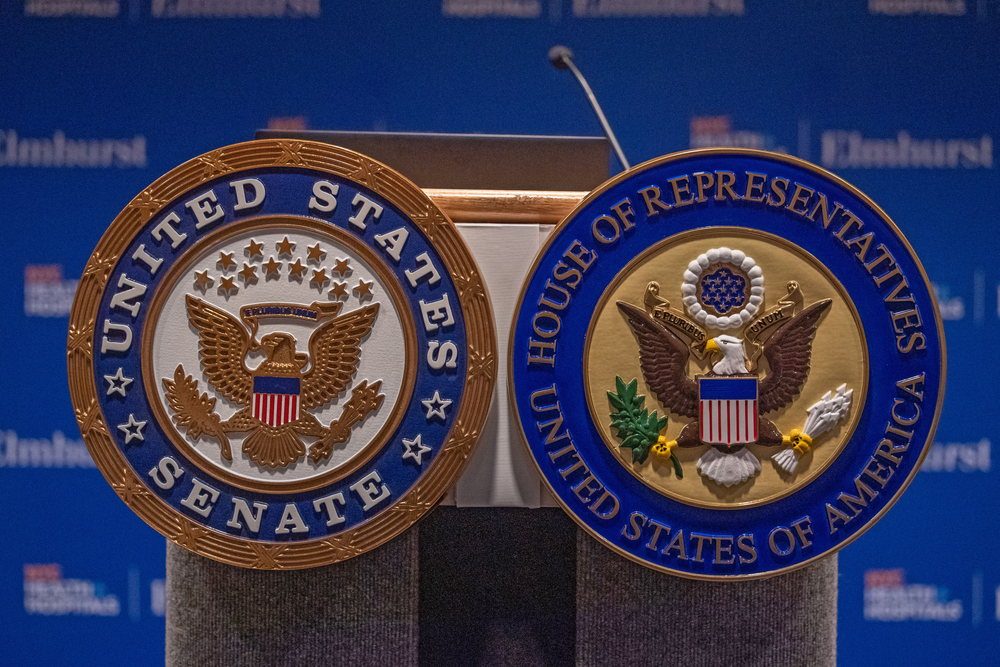
The election gives Democrats both chambers, but not until January 3, and most federal workforce rules and the pay freeze can’t be changed by Congress alone.
The Associated Press has called both chambers for Democrats. As of November 12, that is at least 55 Senate seats, and a House majority of more than 250 seats. The president remains a Republican, so anything Congress passes needs his signature or a two-thirds vote in both chambers to override a veto.
What Congress Can Change
- Spending law. Funding bills can add or continue restrictions on layoffs and reorganizations. A federal judge blocked USDA’s reorganization in October because it conflicted with a restriction in current spending law.
- Oversight. Committees can hold hearings, request records, and question agency leaders on topics like OPM’s data access, deferred resignation costs, and performance rating rules.
- Confirmations. The Senate votes on nominees, including to OPM, the MSPB, and the FLRA.
- Pay and benefits by statute. Congress can write a raise or a benefit change into law, again with the president’s signature.
What it Can’t Change on its Own
Most recent workforce changes are executive actions: OPM’s RIF rules, probationary period rules, the 40% cap on top performance ratings, the administrative leave rule, and the end of time-in-grade. A new majority can’t reverse them without a law the president signs, and the Senate’s 60-vote threshold for most bills still applies. Court cases also continue independently.
When Could Anything Change?
| Date | What happens | Who decides |
| December 11 | Current funding expires | The current Congress and the president |
| Mid-to-late December | Executive order sets 2027 pay | The president |
| January 3 | The new Congress convenes | Newly elected members |
| January 10 | First pay period of 2027 begins | Not applicable |
| After January 3 | New committee leaders set agendas and hearings | The new majority |
Why the Pay Freeze is Unlikely to Change
On August 26, the president’s alternative pay plan proposed holding base and locality pay at 2026 rates for most civilian employees, with 3.8% for law enforcement and 5% to 7% for the military. The rates become final when the president signs an executive order, which usually happens in mid-to-late December, before the new Congress is seated.
The push to change that is already underway. Rep. James Walkinshaw (D-Va.) says he will press for a raise in any deal to keep the government open past December 11. His starting point is the 4.1% in the FAIR Act, which combines a 3.1% across-the-board increase with about 1% in locality pay, and more than 100 lawmakers have asked for at least 3.8%. But Republicans still control Congress until January 3; House Appropriations rejected a 3.1% amendment earlier this year on a 28-to-32 party-line vote, and the president would have to sign any raise.
If a funding deal doesn’t get done until 2027, a raise could still be applied retroactively. This happened back in 2019, when a 1.9% raise enacted in February took effect back to January. A freeze does not stop within-grade increases or promotions, and FFEBA’s pay guide explains how the annual adjustment works.